


Search CAP

History of CAP

CAP was a Vision for Arizona

In the early 20th century, Arizona’s leaders knew the state’s future depended on a water supply that was secure, stable and renewable. They pursued that vision; the result was Central Arizona Project (CAP), a 336-mile system that supplies Colorado River water to central and southern Arizona where more than six million people reside, and delivers more tribal water than any other organization in the United States.

Arizona knew the importance of water

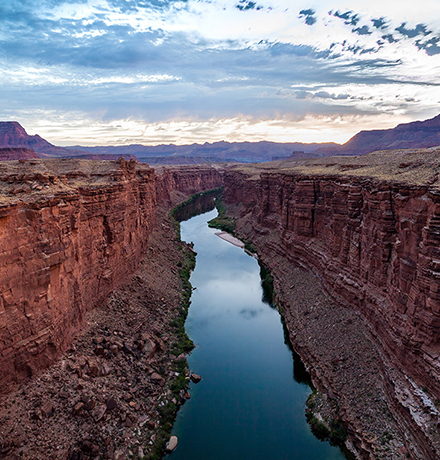
In the early 1900s, the seven states that share the Colorado River Basin – Arizona, California, Colorado, Nevada, New Mexico, Utah and Wyoming – negotiated for shares of the river’s water. They came to an agreement to divide up the supply among the Upper Basin (Colorado, New Mexico, Utah and Wyoming) and the Lower Basin (Arizona, California and Nevada) and later, the Republic of Mexico, by requiring minimum deliveries volumes from the Upper Basin to those downstream.

Check 32 Construction


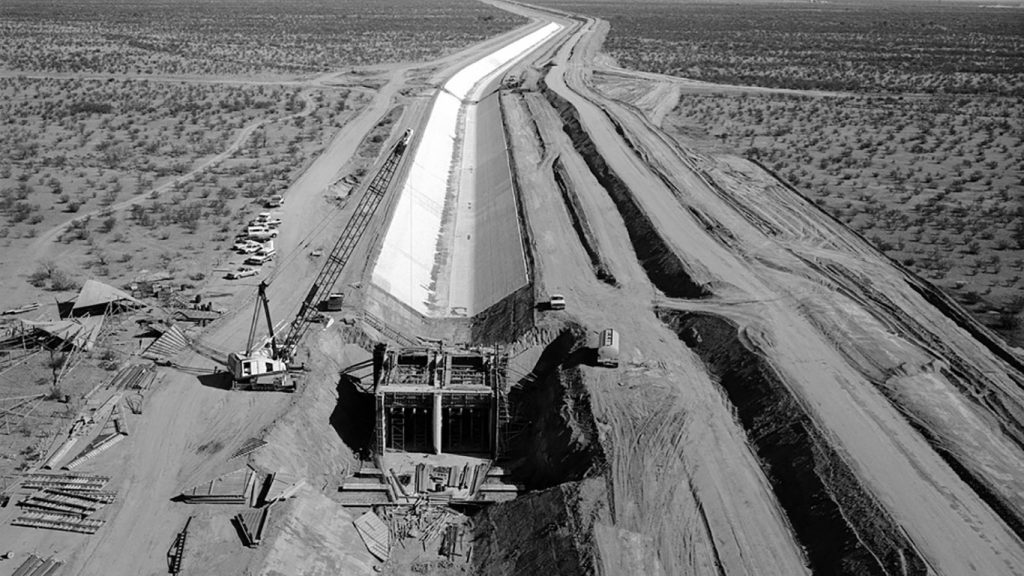
In 1968, President Lyndon B. Johnson signed the Colorado River Basin Project Act, which authorized construction of Central Arizona Project (CAP) by the U.S. Department of the Interior’s Bureau of Reclamation. The system would provide a way for Arizona to fully use its main stem allotment of the Colorado River through the delivery of its waters to the most populous areas of the state. In 1971, the Central Arizona Water Conservation District (CAWCD) was created to provide Arizona a means to contract with and repay the federal government for the reimbursable costs of construction and to manage and operate the system.

CAP Story Map

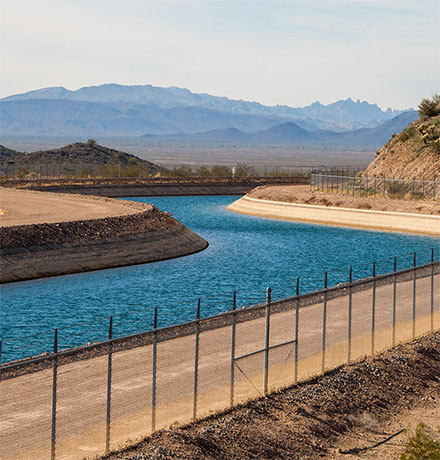
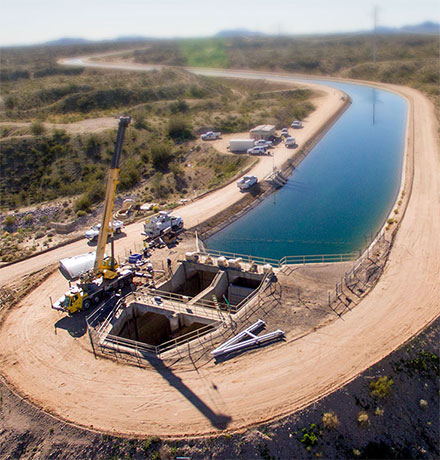
The canal system stretches 336 miles, lifts the water approximately 3,000 feet in elevation over the course of the system and has 15 pumping plants including the hydroelectric pump/generating plant at New Waddell Dam, Lake Pleasant storage reservoir, 39 radial gate structures to control the flow of water and more than 50 turnouts to deliver water.

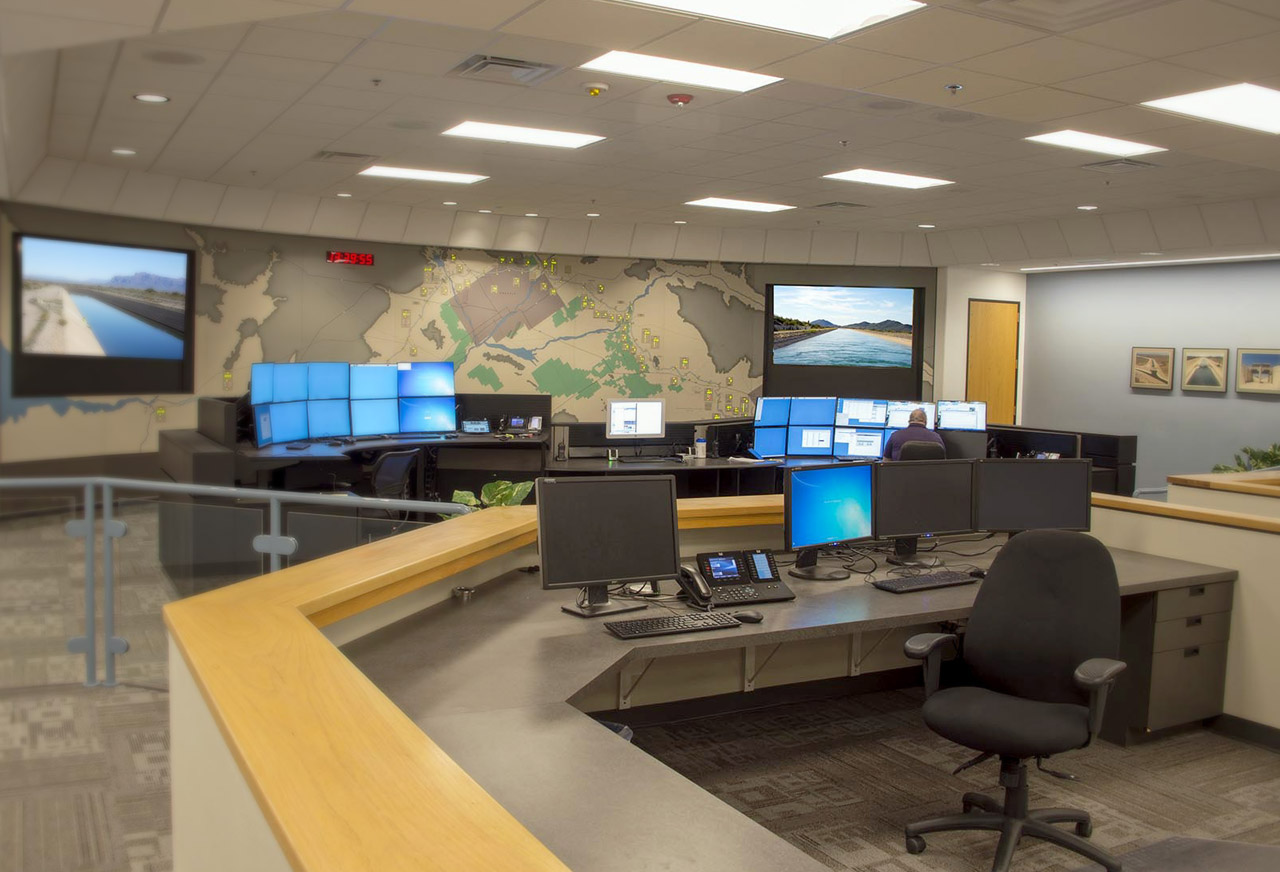
CAP Control Center
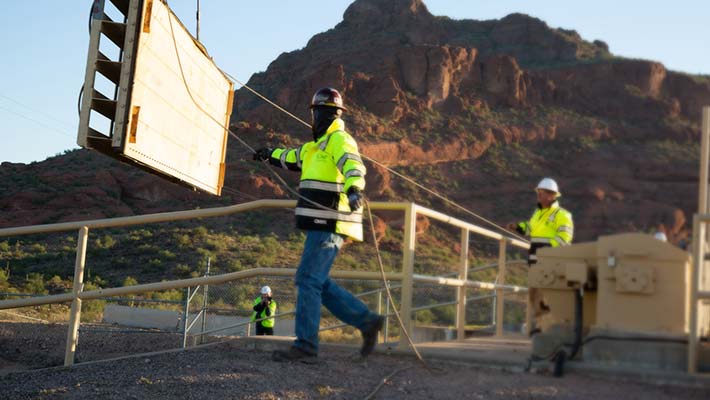
CAP Water Operations employees ensure reliable deliveries

System Facts:

water depth icon

Reach 1 is the first section of the canal and is wider and deeper than the rest of the system. It acts as an internal reservoir system and holds 20% of all the water in the canal at any time.

tunnel icon

4 tunnels are used to move water through mountainous terrain.

new waddell dam icon

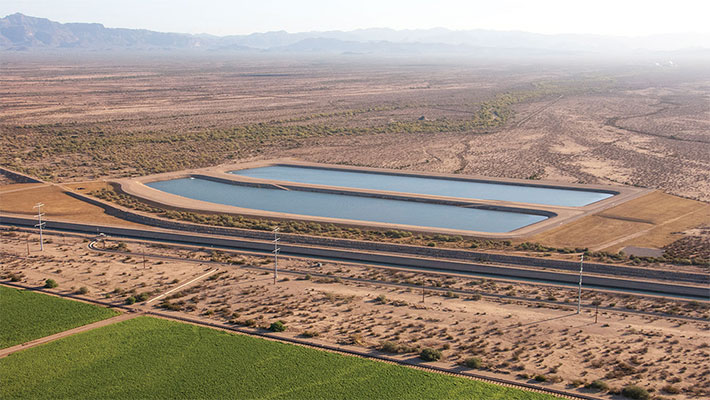
New Waddell Dam is nearly 5,000 feet long and forms Lake Pleasant, CAP’s storage reservoir.

canal icon

The canal descends approximately 5 inches per mile.
water recharge project icon

CAP owns and operates 6 recharge projects where water delivered by CAP is stored.

compass icon

As water in the canal progresses west to east, the size of both the pumping plants and aqueduct diminishes.
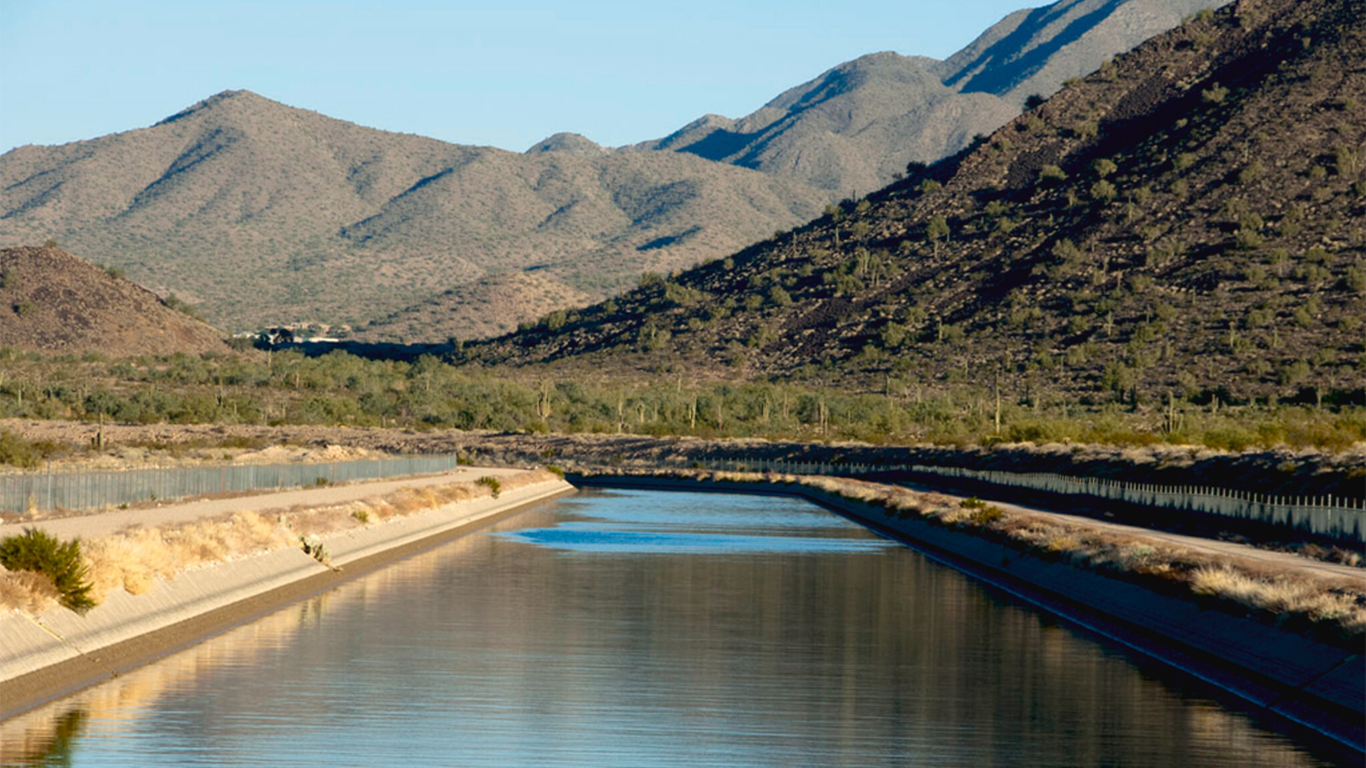
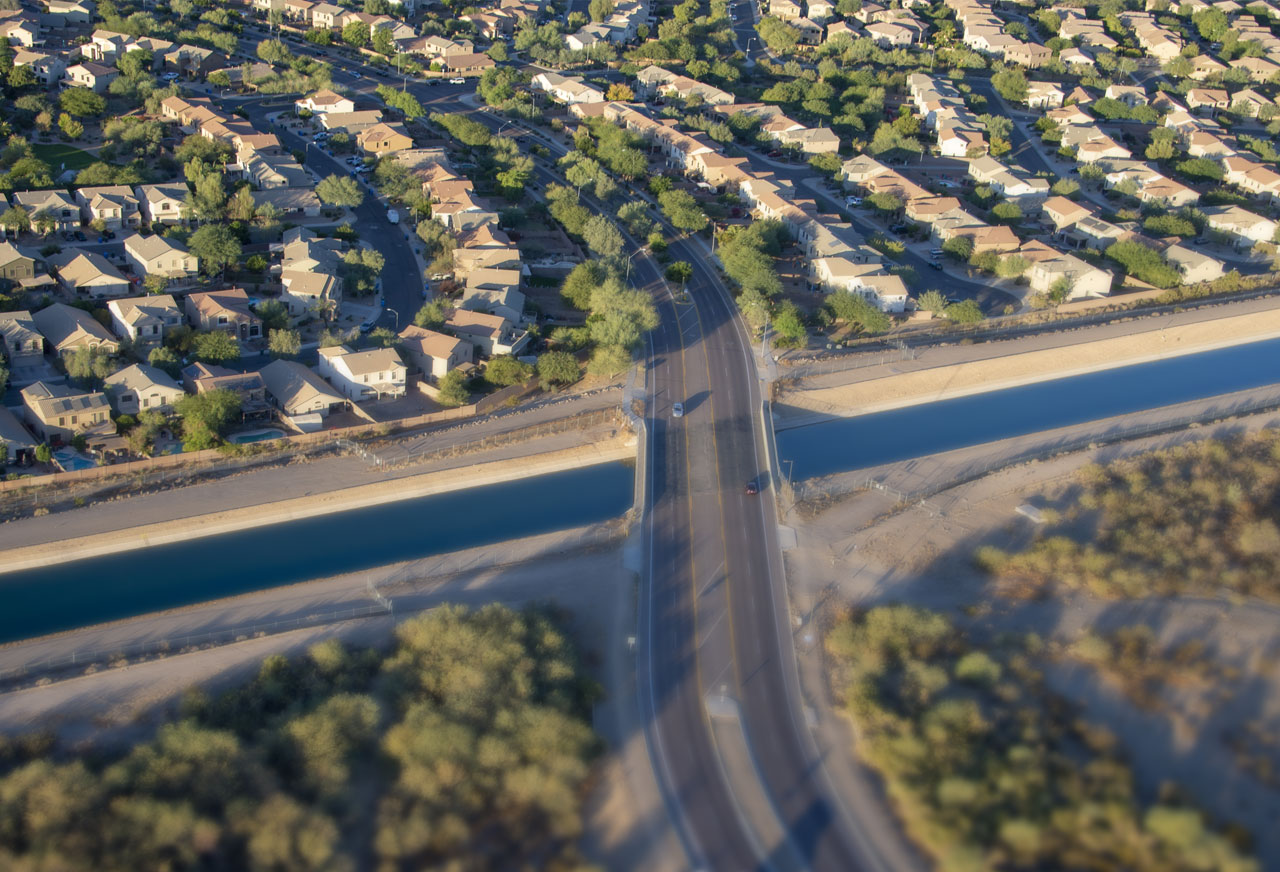
Central Arizona Project Canal

CAP water is important to Communities and Industries

CAP typically has more than 60 water users that fall into three user groups. They use CAP’s Colorado River water to run businesses, water crops and maintain households, all of which is critical to the quality of life in Arizona.

CAP Water is Key to our Economy

Few natural resources are as precious as water, and by CAP providing reliable, renewable Colorado River water, the Arizona economy is stronger and residents can enjoy a higher quality of life.

Repayment and Revenue

CAP generates revenue in a variety of ways to fund its operation and maintenance and to fulfill repayment obligations to the federal government and bondholders. Revenue is generated by the sale of water and power; capital and facility-use fees paid by water users; property taxes paid by non-Indian reservation residents of Maricopa, Pima and Pinal counties; and investments.

The price of water is determined annually by the CAWCD Board of Directors based on projections of energy, operation, maintenance and replacement costs. As a public entity, CAP does not make a profit and has a responsibility to provide a reliable water supply at a reasonable price.

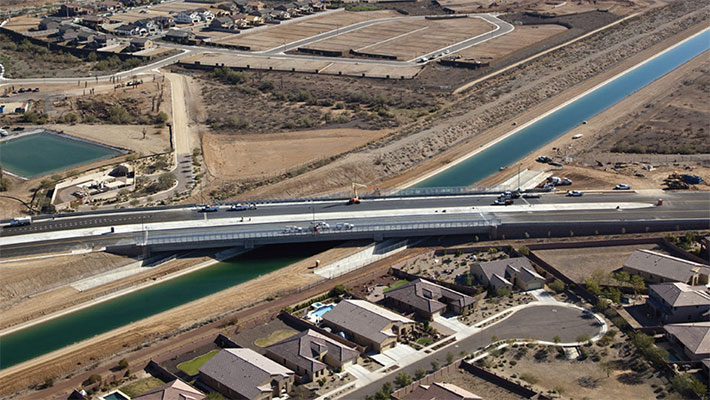
CAP Canal Norterra Bridge
Alert Icon

This link is taking you away from the CAP website and provides information on an external site that is consistent with the intended purpose of the CAP website. CAP cannot attest to the accuracy of the information provided by this link or any other linked site. CAP is not responsible for the information or links provided by sponsors of the site or any products presented on the site. These links do not represent an endorsement by CAP or its directors or employees of site sponsors or products.

Alert Icon

This link is taking you away from the CAP website and provides information on an external site that is consistent with the intended purpose of the CAP website. CAP cannot attest to the accuracy of the information provided by this link or any other linked site. CAP is not responsible for the information or links provided by sponsors of the site or any products presented on the site. These links do not represent an endorsement by CAP or its directors or employees of site sponsors or products.

Alert Icon

This link is taking you away from the CAP website and provides information on an external site that is consistent with the intended purpose of the CAP website. CAP cannot attest to the accuracy of the information provided by this link or any other linked site. CAP is not responsible for the information or links provided by sponsors of the site or any products presented on the site. These links do not represent an endorsement by CAP or its directors or employees of site sponsors or products.

Alert Icon

This link is taking you away from the CAP website and provides information on an external site that is consistent with the intended purpose of the CAP website. CAP cannot attest to the accuracy of the information provided by this link or any other linked site. CAP is not responsible for the information or links provided by sponsors of the site or any products presented on the site. These links do not represent an endorsement by CAP or its directors or employees of site sponsors or products.